Back to all posts
How Much Does Custom Software Cost in 2026? ERP, CRM & Web App Pricing
Walid Hasmi7/22/2026• 9 min read
How Much Does Custom Software Cost in 2026? A Real Pricing Guide for Web Apps, CRM & ERP
“How much does custom software cost?” is the first question every founder, operations lead, and CFO asks and the honest answer is a range, not a number. A custom software project in 2026 can land anywhere from around $10,000 for a focused web app to $500,000+ for a full enterprise ERP. The reason the range is so wide is simple: “custom software” describes everything from a single-purpose internal tool to a multi-module platform running an entire business. This guide breaks the numbers into clear tiers, explains exactly what drives the price, compares developer rates by region, and shows you the 5-year total cost of ownership against off-the-shelf SaaS. So, you can budget with confidence and evaluate any quote you receive.
The short answer: custom software cost ranges in 2026
Most custom software projects fall between $30,000 and $200,000, and according to Clutch’s benchmark data the average project runs roughly $132,000 and takes about 13 months to complete. But that average hides a huge spread, because the price is driven almost entirely by scope. Here are the real-world tiers you’ll encounter:
| Project type | Typical cost (2026) | Timeline |
| Simple web app / MVP | $10,000–$60,000 | 1–3 months |
| Operational platform / custom CRM | $60,000–$150,000 | 3–6 months |
| Enterprise ERP (8+ modules) | $150,000–$500,000+ | 9–18 months |
| Industry average (Clutch) | ~$132,000 | ~13 months |
If you only remember one thing: the price is a function of scope, complexity, and who builds it not a fixed rate card. The rest of this guide explains each of those levers so you can push the number in your favor.
What actually drives custom software development cost?
Two projects described in the same sentence “build me a CRM” can differ in price by 10x. These are the seven factors that move the number the most.
1. Scope and feature count
This is the single biggest multiplier. A contact tracker is not the same product as a platform with automation, billing, and role-based permissions. Unclear scope is also the most expensive mistake you can make: poor requirements management is a leading cause of project failure and budget overruns, and over half of software projects exceed their original budget - almost always because scope was never nailed down before the build started.
2. Integrations and APIs
Every system your software must talk to payment gateways, accounting tools, email platforms, shipping providers, legacy databases adds engineering hours. A simple one-way email or calendar integration might cost $3,000 - $8,000; a complex, bidirectional sync with a legacy ERP can consume 30 - 40% of the total build.
3. Team seniority and delivery region
The same feature built by a San Francisco senior engineer versus an Eastern European or South Asian team can differ by 3-5x on rate alone. Geography is consistently one of the strongest predictors of the final invoice.
4. UI/UX and product design
A polished, tested interface costs more than a bare CRUD screen - but it’s usually money well spent, because poor usability is the number-one reason internal teams quietly abandon the software you paid to build.
5. Data migration
Moving customer or operational data out of spreadsheets and legacy systems requires cleaning, mapping, and validation. Simple transfers start around $5,000; complex multi-source consolidation with messy data can run $30,000 or more.
6. Security and compliance
GDPR, SOC 2, HIPAA, PCI - every compliance requirement adds architecture, testing, and audit overhead. AI/ML features and stricter data-privacy rules are actively pushing 2026 prices up across the board.
7. Platform coverage
Supporting web, iOS, Android, and an admin panel doesn’t double cost - it compounds it, because logic, testing, and release cycles multiply per platform. Cross-platform frameworks like Flutter or React Native can materially reduce this.
Get a Quote
Custom software cost by project type
Here’s how the ranges break down across the three project types most businesses ask us about, web applications, custom CRM, and custom ERP.
| Project type | What it covers | Typical cost | Timeline |
| Web app / MVP | Focused single-purpose tool, core feature set | $15,000–$60,000 | 1–3 months |
| Operational web platform | Multi-user SaaS, dashboards, workflows | $60,000–$150,000 | 3–6 months |
| Custom CRM | Pipeline, automation, reporting, portal | $25,000–$200,000 | 2–5 months |
| Custom ERP | Finance, inventory, HR, procurement | $50,000–$500,000+ | 4–18 months |
| Annual maintenance | Fixes, security, hosting, enhancements | 15–20% of build / yr | Ongoing |
How much does a custom web app cost?
A focused custom web application that solves one clear problem — an internal tool, a booking system, a customer portal typically starts at $15,000–$60,000. If you’re validating a new idea, an MVP build is the smartest way to spend the least money to learn the most.
How much does a custom CRM cost?
A custom CRM ranges from about $25,000 for a pipeline tracker replacing spreadsheets, to $200,000+ for a multi-department platform with billing, AI features, and a dozen integrations. Against three years of per-seat SaaS licensing, a custom CRM typically breaks even between months 24 and 40 then gets cheaper every year while the subscription only goes up.
How much does a custom ERP cost?
A custom ERP starts around 40,000 for a focused 3 - 4 module build and runs to $500,000+ for a full enterprise system. The ERP market is worth roughly $47B and grows ~9.5% a year for a reason: businesses that outgrow spreadsheets need one connected operational backbone, and the average ERP project returns around 52% ROI with payback inside ~2.5 years.
Why the same software costs 3x more depending on region
Developer hourly rate is the biggest lever you control. The difference between hiring in San Francisco and hiring a skilled team in Eastern Europe or South Asia isn’t just a cost saving for a funded startup it’s the difference between a 6-month runway and an 18-month one. Typical 2026 senior-developer rates by region:
| Region | Senior dev rate | Notes |
| North America | $125–$250+/hr | Highest rates; same-timezone collaboration |
| Western / Northern Europe | $70–$120/hr | GDPR-native, strong engineering education |
| Eastern Europe | $30–$65/hr | Best quality-to-cost ratio |
| South & Southeast Asia | $20–$45/hr | Lowest rates; deep talent pools |
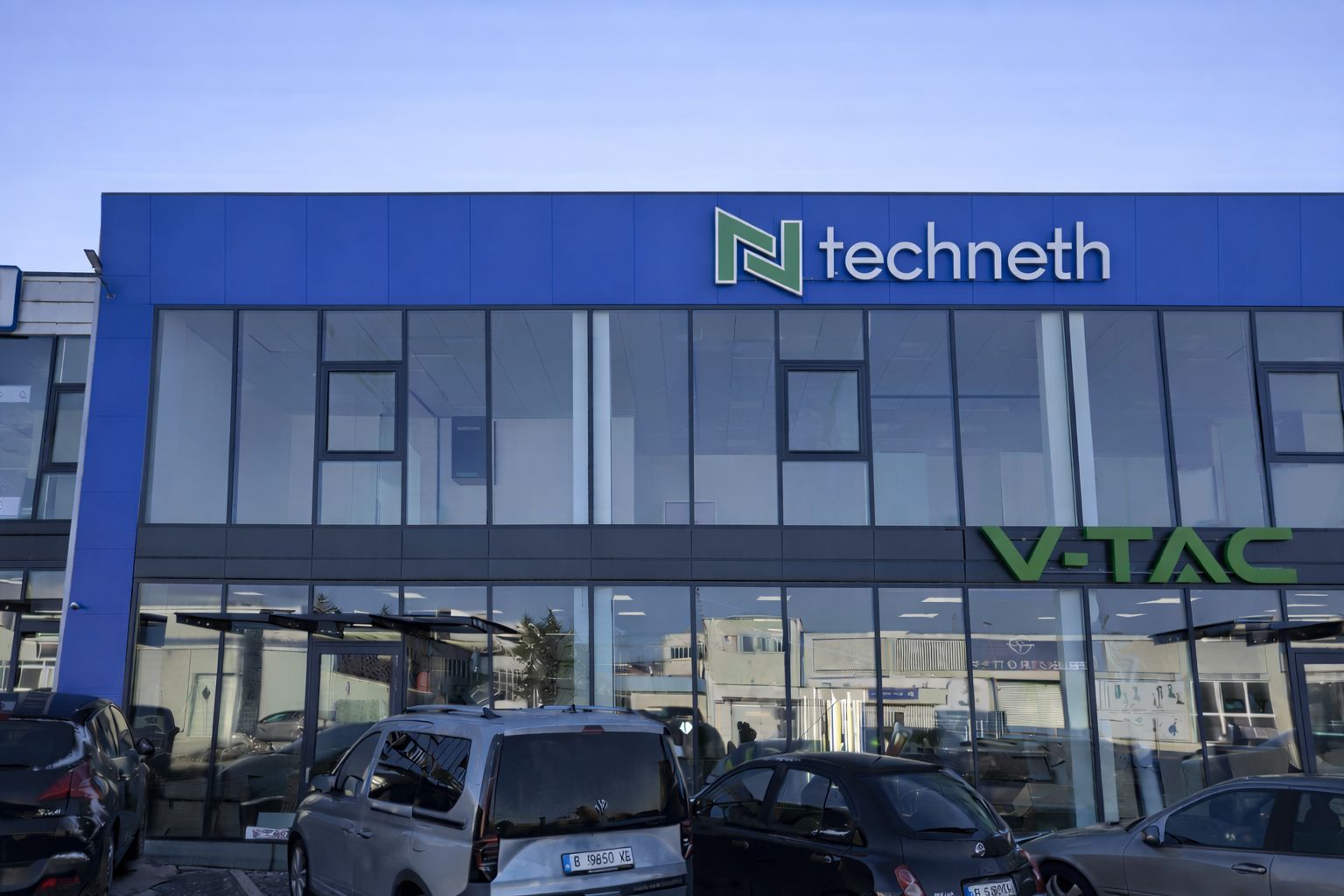
The smartest teams use a hybrid model: senior strategy and project management aligned to your timezone, with delivery in a lower-cost region. This is exactly how Techneth operates - a European headquarters in Varna, Bulgaria paired with a delivery team in Dhaka, Bangladesh - which can cut the build cost by 40 - 60% versus North American & typical European rates without sacrificing communication & build quality.
Get a Quote
The extra costs people forget in SAAS vs Total cost of ownership of custom built App
The build price is only year one. To budget honestly, look at the total cost of ownership (TCO) over 3–5 years. After launch you’ll pay for maintenance - industry-standard is 15–20% of the initial development cost per year - plus hosting, third-party service fees, and future feature work.
Here’s the comparison that matters. A $100,000 custom CRM with $15,000/year maintenance totals about $145,000 over five years - and you own it outright. A comparable SaaS CRM at $100/user/month for 20 users costs $24,000 a year, or $120,000 over five years - and that number climbs every time you add a seat or the vendor raises prices, and you own nothing at the end. For small teams, SaaS wins. For growing teams, the math flips.
Custom software vs off-the-shelf: when the math flips
Custom isn’t always the answer. If an off-the-shelf tool covers your process with minimal customisation, use it. Custom software becomes the better investment when:
- Per-seat licensing scales painfully as your team grows.
- Your workflows are genuinely non-standard and the SaaS forces you to change how you operate.
- You’re paying for 20 modules but only use 5.
- You need deep integration with proprietary systems standard connectors can’t reach.
- Your industry has compliance requirements no standard product handles natively.
The break-even point is the deciding factor: if a custom build pays for itself against your SaaS spend within 2–3 years, building almost always wins over the long run.
How to get an accurate custom software quote
Any agency that quotes a firm number before understanding your scope is guessing. A reliable estimate comes from a short discovery conversation: your workflows, the systems it must integrate with, your user count, and your must-have features versus nice-to-haves. That’s how you turn a $15K–$500K range into a single, defensible number.
At Techneth we build web applications, custom CRMs, and custom ERP systems for businesses that have outgrown spreadsheets and rigid SaaS tools. You can learn more about how we work, browse the full range of our services, or tell us what you’re building and we’ll come back with a scoped proposal within 3 business days.
Get the accurate quotation
Frequently asked questions about custom software cost
How much does it cost to build custom software in 2026?
Most custom software projects cost between $30,000 and $200,000, with the average around $132,000. Simple web apps and MVPs start near $15,000, while enterprise ERP systems can exceed $500,000. The final number depends on scope, integrations, design, and who builds it. Get the accurate quotation
Why is custom software so expensive?
The largest cost is human expertise - senior engineering hours. Complexity, third-party integrations, data migration, security/compliance, and multi-platform support all add hours, and developer rates vary 3 - 5x by region. Unclear scope is the biggest hidden multiplier.
Is custom software cheaper than SaaS in the long run?
Often, yes for growing teams. A custom build has a higher upfront cost but no per-seat licensing, so it typically breaks even against SaaS within 24–40 months and gets cheaper every year after. For small teams that fit a standard tool, SaaS usually stays cheaper.
How much does ongoing maintenance cost?
Budget 15–20% of the initial development cost per year - covering hosting, security updates, bug fixes, and minor enhancements. A $100,000 build costs roughly $15,000-$20,000 a year to keep running and current.
How can I reduce my custom software cost without cutting corners?
Start with an MVP and add features in phases, define scope tightly before development begins, prioritize high-ROI features first, and use a hybrid delivery model pairing senior management in your timezone with development in a lower-cost region.
Still have questions like, how much is the exact cost of building a CRM or how can you get a value for money quote for building or scaling your next big idea. Then speak with our team of experts ready to guide you through your journey and take that stress off your heads. Book a consultation today.
Resources
Latest from the blog
The latest industry news, technologies, and resources.
Ready to start your next project?
Join over 4,000+ startups already growing with our engineering and design expertise.
Trusted by innovative teams everywhere