Custom CRM Development Services That Fit
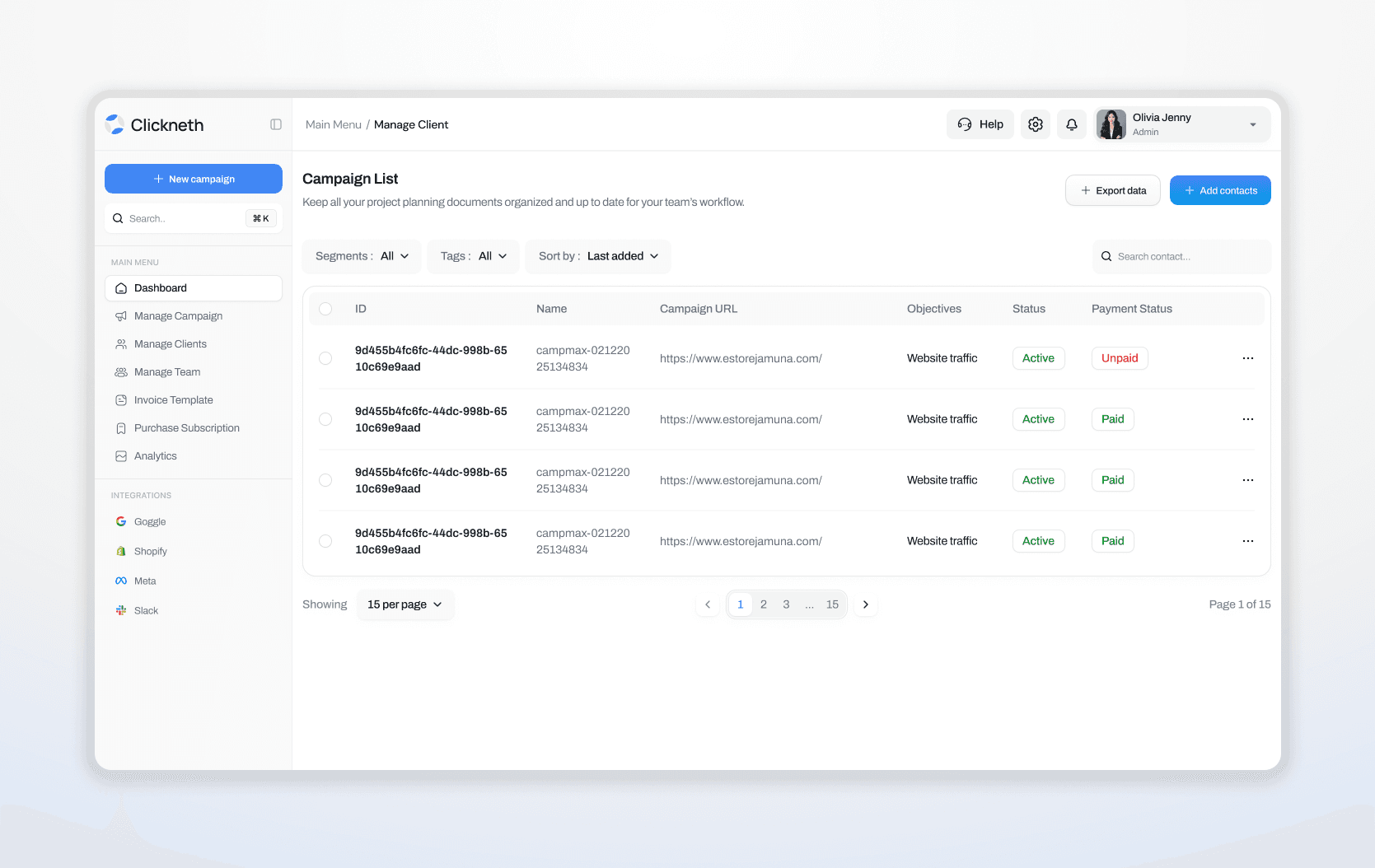
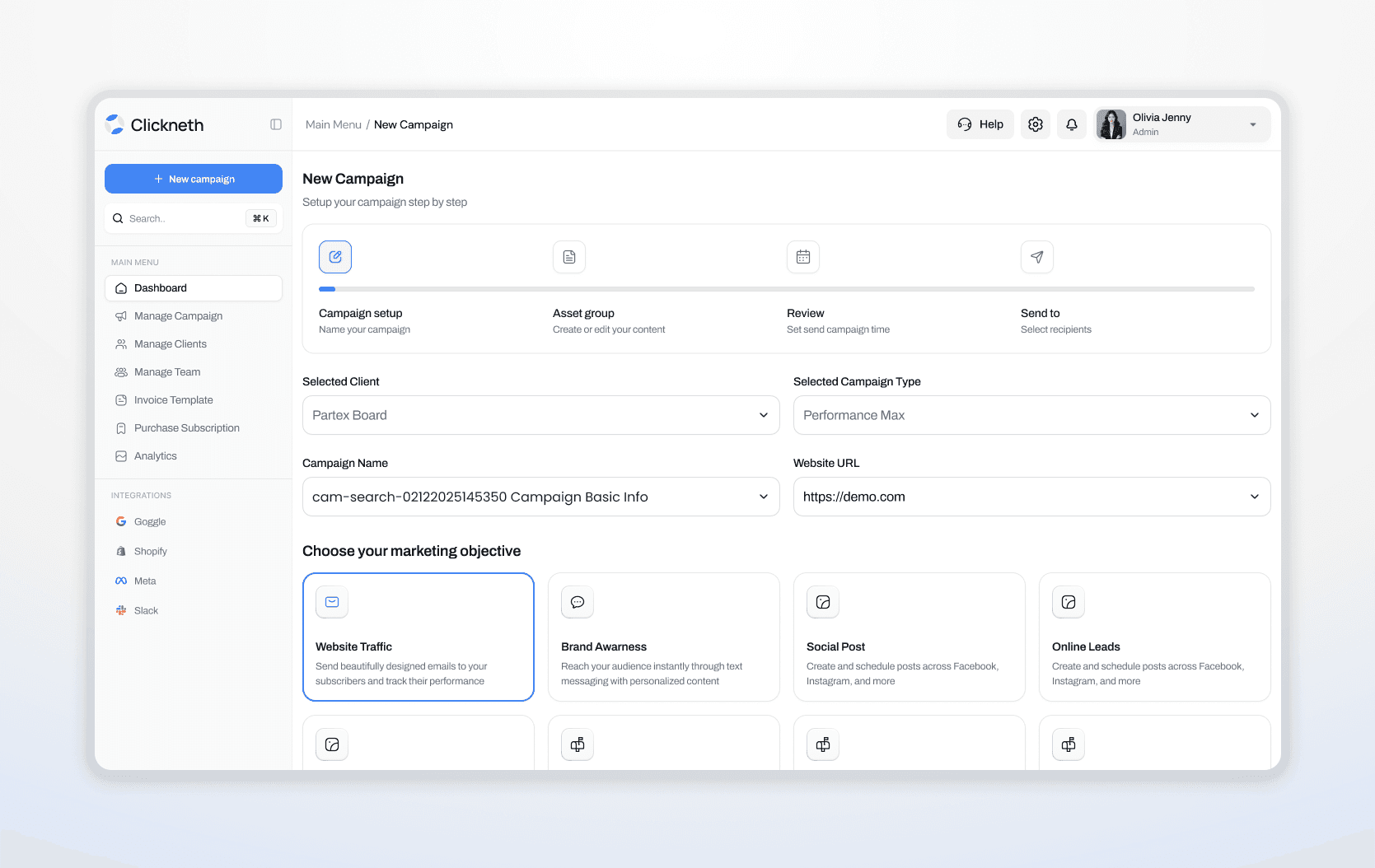
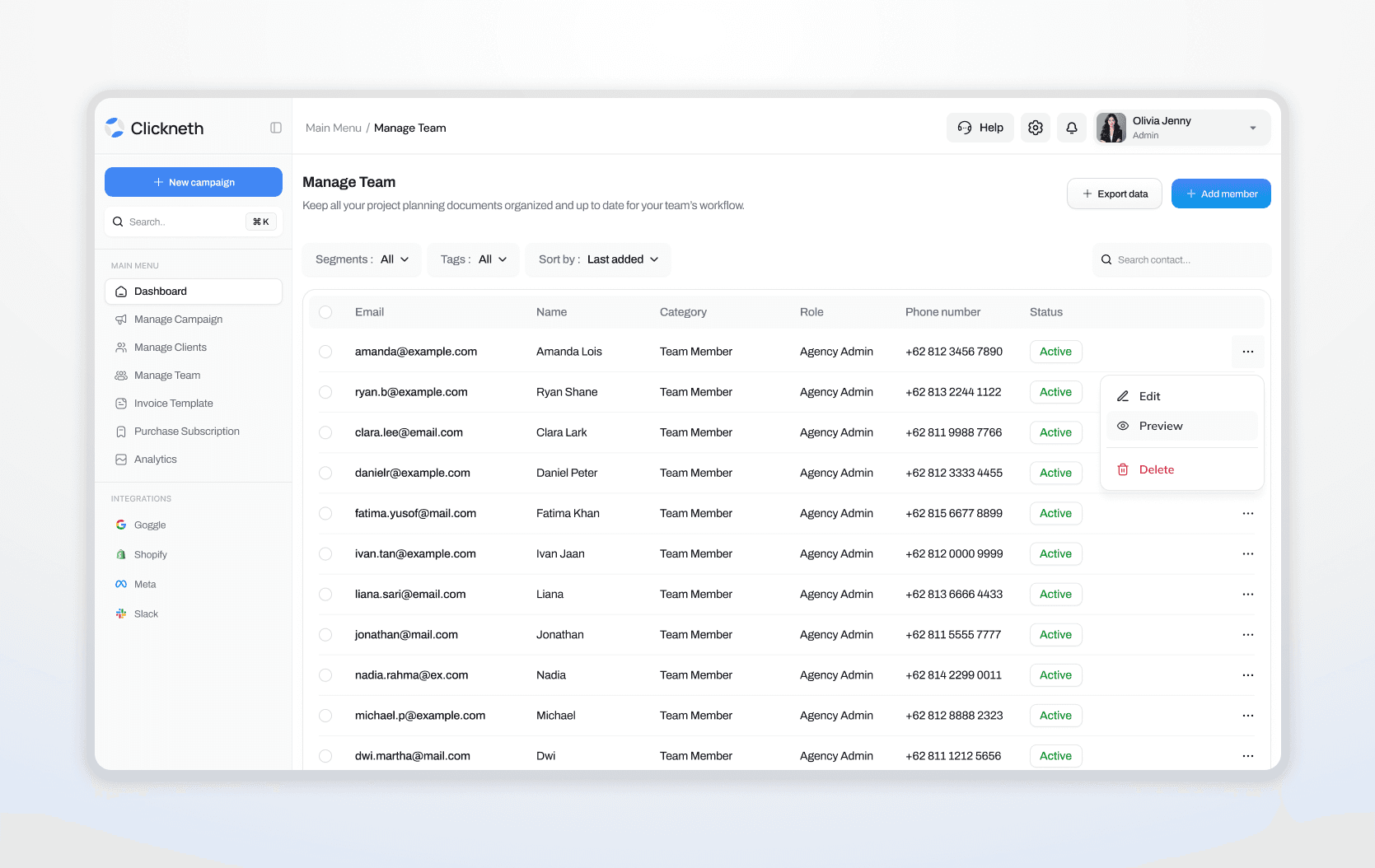
You need custom CRM development because Salesforce, HubSpot, and Zoho were built for everyone, which means they were built for no one in particular. If you are paying for features you do not use, forcing your team to work around a system that does not match your sales process, or stitching together plugins to get basic functionality, you need a CRM development company that builds what your business actually needs. Your team gets end-to-end CRM software development: sales pipeline management, contact tracking, marketing automation, customer service workflows, reporting dashboards, and every integration in between. Whether you want to build a CRM system from scratch, develop a CRM platform that connects your sales, marketing, and support teams in one place, or bring in experienced CRM developers to extend or replace a system that is not working, your custom CRM development is built for enterprise teams and scaling businesses. Ready for a CRM development quote? Tell us what your current CRM cannot do.
Custom CRM development typically costs between $10,000 and $150,000 depending on module count, integration complexity, and user volume. A focused CRM with sales pipeline and contact management starts around $10,000. A full enterprise CRM with automation, analytics, and multi-department workflows runs $100,000 to $150,000+.
Core Capabilities and Features
CRM Modules Built Around Your Workflows
Sales pipeline management, contact and account management, lead management, marketing automation, customer service, reporting and analytics, workflow automation, document management, inventory and order management, and API integrations. Most businesses need 4 to 6 modules at launch. The first version is scoped around the workflows that matter most and modules are added as your team grows into the system.
- Visual deal stages, drag-and-drop pipeline, deal value tracking, win/loss analysis, and forecasting for sales reps and managers
- Unified customer profiles, interaction history, company hierarchies, custom fields, tags, and segmentation for your entire organisation
- Rule-based triggers, approval chains, task assignment, notifications, status changes, and escalation rules across all departments

Industry-Specific CRM Development
Generic CRMs assume every business sells the same way. They do not. A real estate agency tracks properties and viewings. A healthcare provider tracks patients and appointments. A logistics company tracks shipments and carriers. A financial services firm tracks portfolios and compliance requirements. The data model, the workflows, and the user interface need to reflect the business, not the software category.
- Real estate CRM with property listings linked to contact records, viewing scheduling, automated follow-ups based on property preferences, and commission tracking
- Healthcare CRM with patient management, appointment scheduling, referral tracking, HIPAA-compliant data handling, and EHR/EMR integration
- SaaS CRM with product usage data, health scoring, churn prediction, renewal management, and integration with billing and support platforms

AI and Automation in Custom CRMs
83% of companies now use AI features in their CRM workflows. AI is no longer a premium add-on. It is becoming the core of how CRMs deliver value. Here is what AI does inside a custom CRM that off-the-shelf tools struggle to match.
- Predictive lead scoring that analyses your historical win/loss data and scores new leads based on likelihood to convert so your sales team focuses on the ones most likely to close
- Customer health scoring that monitors usage patterns, support ticket frequency, and engagement levels to predict churn before it happens
- Automated data enrichment that pulls company data, social profiles, and firmographic information from public sources and enriches contact records automatically

Why It Matters
If your sales team is tracking deals in spreadsheets because the CRM is too slow, too confusing, or too rigid, you do not have a CRM problem. You have a revenue visibility problem. Every deal that falls through because nobody followed up, every customer who churned because nobody noticed the warning signs, every forecast that was wrong because the data was incomplete, all of those trace back to a CRM that does not work for your team. The companies that get the most from custom CRM development are the ones who treat the CRM as their operational backbone, not as a contact database. They map their actual sales process before designing the system. They involve the people who will use it daily in the design process. They launch lean, measure adoption, and add features based on what their team actually needs. And they invest in integrations that make the CRM the single place where customer truth lives. A CRM that your team loves using is not a luxury. It is the difference between knowing what is happening in your business and guessing.
By the Numbers
$12.91B
The global CRM market was valued at 12.91 billion in 2025, projected to reach 62.74 billion by 2032. CRM is the largest enterprise software category, growing faster than ERP, HR tech, and supply chain.
Source: Fortune Business Insights, 2025
91%
91% of companies with 10+ employees use a CRM. Adoption is near-universal. The differentiator is no longer having a CRM. It is having one that actually fits your business.
Source: DemandSage / Wave Connect, 2026
70%
70% of CRM projects fail to meet their goals. The cause is not technology. It is misalignment between the system and the teams using it. Process mapping before development is not optional.
Source: Integrate.io / Salesmate, 2026
$8.71
CRM systems return an average of $8.71 for every dollar invested. For custom CRMs designed around specific business processes, the return is often higher because adoption rates are higher.
Source: DemandSage, 2026
34%
CRM adoption increases sales productivity by 34% and improves forecast accuracy by 32 to 42%. These gains come from automation, centralised data, and reduced administrative overhead.
Source: Kixie / SLT Creative, 2025
"The most expensive CRM is the one your team refuses to use. It does not matter how powerful the software is if the people entering data every day find it frustrating, slow, or irrelevant to their actual workflow. Build the CRM around the team, not the other way around."
Technologies
Our Tech Stack
Our Process
How we turn ideas into reality.
Discovery and Process Mapping
Before anything is designed, your actual workflows are mapped. How does a lead enter your system? What happens between first contact and closed deal? Who touches the record and when? What data do you need at each stage? Most CRM projects fail because the system was designed around software conventions rather than real team behaviour.
Architecture and Data Model
The data model is designed: entities (contacts, companies, deals, tickets, products), relationships between them, custom fields, and access permissions. Then the tech stack is planned. For most CRM projects the build uses React or Next.js on the frontend, Node.js or Python on the backend, PostgreSQL for the database, and Redis for caching.
Development and Integration
Built in sprints, shipping functional modules every 2 to 3 weeks. Integrations happen in parallel: email (Gmail, Outlook), calendar, phone/VoIP, accounting (Xero, QuickBooks), marketing tools (Mailchimp, Klaviyo), and any proprietary systems your business runs. The CRM needs to be the single source of truth, which means it needs to talk to everything.
Training and Adoption
Role-based training is provided: sales reps learn their pipeline view, managers learn reporting, admins learn configuration. In-app onboarding flows and contextual help are built in so new team members can get productive without a training session.
Pricing
Investment Overview
Module Count
A focused CRM with sales pipeline and contact management starts around $10,000. A full enterprise CRM with multiple modules, workflow automation, AI features, and deep integrations takes 6 to 12 months and runs $100,000 to $150,000+. Most businesses need 4 to 6 modules at launch.
Integration Complexity
Integrations happen in parallel: email (Gmail, Outlook), calendar, phone/VoIP, accounting (Xero, QuickBooks), marketing tools (Mailchimp, Klaviyo), and any proprietary systems your business runs. The CRM needs to be the single source of truth, which means it needs to talk to everything.
User Volume
Ongoing maintenance and support typically runs $1,000 to $3,000 per month depending on user volume, integration count, and feature development pace. Compare that to $80 to $300 per user per month for Salesforce or HubSpot, which scales linearly with headcount.
Everything we do at Techneth is built around making data move reliably between the systems that matter. If you want to understand our approach before committing, you can read more about our team and how we work. Or explore the full range of digital product and development services we offer, like custom crm development. And if you already know what you need, get in touch directly and we will find time to talk.
Frequently Asked Questions
Everything you need to know about this service.
- How long does custom CRM development take?
- A focused CRM with sales pipeline, contact management, and basic reporting takes 3 to 4 months. A full enterprise CRM with multiple modules, workflow automation, AI features, and deep integrations takes 6 to 12 months. Launches happen in phases so your team starts using core features while the rest is built.
- Should I customise Salesforce or build from scratch?
- Customise Salesforce if your team already uses it, your requirements fit within its ecosystem, and you want to leverage its AppExchange marketplace. Build from scratch if Salesforce licensing costs are too high for your team size, your workflows do not fit its data model, or you need deep integration with proprietary systems. There is no universal answer. It depends on your process complexity and budget.
- Can you migrate our data from HubSpot or Salesforce?
- Yes. Full data migration is handled including contact records, deal history, activity logs, custom fields, files, and email threads. The process includes data audit, field mapping, deduplication, validation on a test environment, and parallel running before cutover. Most migrations take 2 to 4 weeks depending on data volume and complexity.
- How much does ongoing maintenance cost?
- Ongoing maintenance and support typically runs $1,000 to $3,000 per month depending on user volume, integration count, and feature development pace. This covers hosting, security updates, bug fixes, performance monitoring, and minor enhancements. Compare that to $80 to $300 per user per month for Salesforce or HubSpot, which scales linearly with headcount.
- Can you add AI to an existing CRM?
- Yes. AI features are added to existing custom CRMs and off-the-shelf platforms. Common additions include predictive lead scoring, automated next-best-action suggestions, customer health scoring, natural language search, and automated data enrichment. AI features can be built as standalone microservices that connect to your CRM via API.
- Do I own the CRM after development?
- Yes. Full ownership of the source code, database, infrastructure configuration, and all documentation. No vendor lock-in, no licensing fees, no per-seat charges. You can host it on your own infrastructure, extend it with your own team, or hire any agency to continue development. It is your system.
Ready to get a quote on your custom crm development?
Tell us what you are building and we will put together a scoped proposal within 3 business days. Here is what happens when you reach out:
- 1You fill in the short project brief form (takes 5 minutes).
- 2We review it and come back with initial thoughts within 24 hours.
- 3We schedule a 30 minute call to align on scope, timeline, and budget.
- 4You receive a written proposal with fixed price options.
No commitment required until you are ready. Request your free custom crm development quote now.
Ready to start your next project?
Join over 4,000+ startups already growing with our engineering and design expertise.
Trusted by innovative teams everywhere