E-Commerce Development

Online Stores Designed to Sell

You need e-commerce development that does more than put products on a page. Whether you want to hire an e-commerce development company to launch your first store, need experienced e-commerce developers to rebuild a platform that is not converting, or want custom e-commerce solutions tailored to how your business actually operates, the goal is always the same: sell more, with less friction. We handle end-to-end online store development on Shopify, WooCommerce, and custom platforms, helping you build an online store that looks good, loads fast, and turns visitors into buyers. That includes dedicated e-commerce development for small businesses launching their first product line and established brands scaling to new channels. Ready for an e-commerce development quote? Tell us what you are selling.

Executive Summary

E-commerce development typically costs between $5,000 and $100,000 depending on the platform, number of products, and level of customisation. A Shopify store with a premium theme starts around $5,000. A fully custom-built store with integrations and bespoke features runs $30,000 to $100,000.

Core Capabilities and Features

Platform Selection

The Right Platform for Your Business

Platform choice is one of the most consequential decisions in e-commerce development. Shopify is best for brands that want to launch fast and prefer a managed platform with minimal technical overhead. WooCommerce is ideal for businesses that need deep content-commerce integration. Custom builds suit complex B2B requirements or unique business logic that no off-the-shelf platform supports.

  • Shopify powers 29% of all e-commerce sites globally and handles hosting, security, and updates for you
  • WooCommerce is open-source and highly extensible for content-heavy stores on WordPress
  • Headless commerce using Shopify Hydrogen or commercetools offers maximum flexibility for larger brands
Start your project
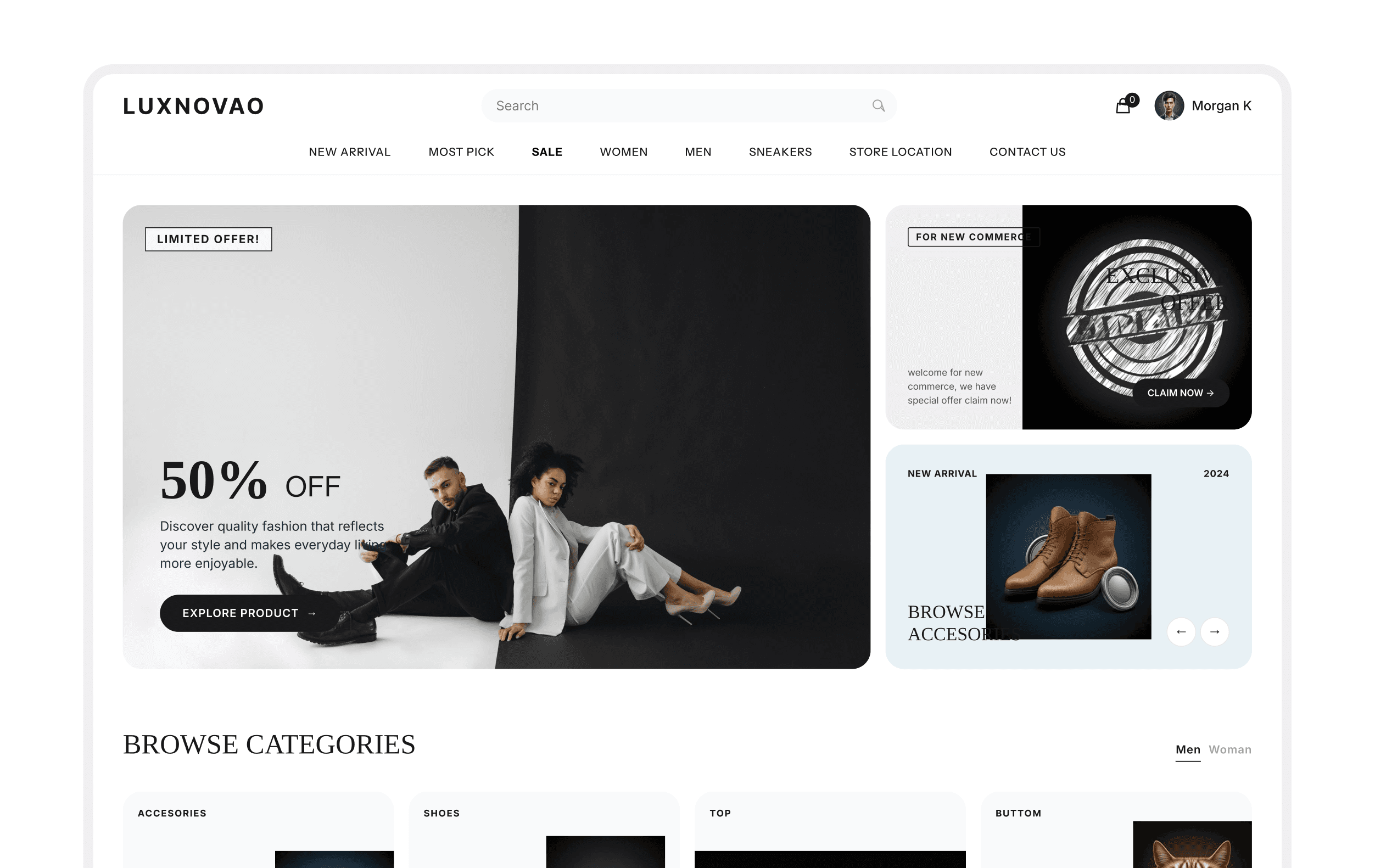
e-commerce development team reviewing online store design with product pages and checkout flow on screen
Checkout and Conversion

Product Pages and Checkout That Convert

Your product page is where the buying decision happens. Product pages are designed with clear imagery, descriptive titles, persuasive copy structure, social proof, and a prominent add-to-cart button. Cart abandonment rates average around 78%. Your checkout flow is streamlined with minimal form fields, guest checkout options, and multiple payment methods.

  • Quick-view functionality, size guides, and comparison tools built where relevant
  • Guest checkout, auto-fill support, and clear shipping cost communication before the final step
  • Every unnecessary click or field in your checkout is costing you money
Start your project
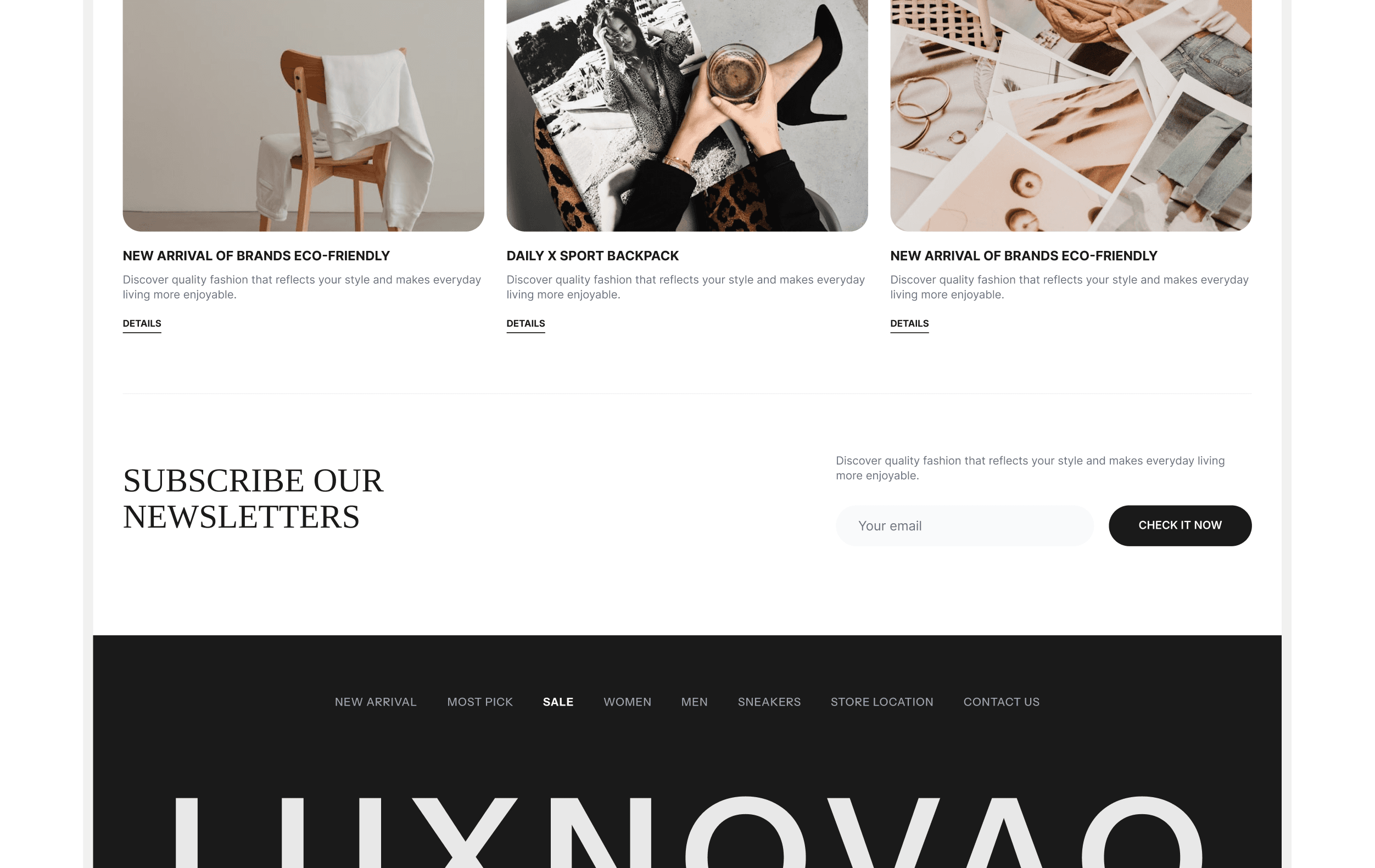
online store development process from discovery and platform selection through to launch and post-launch support
Mobile-First Design

Built for the 77% on Mobile

Mobile devices account for 77% of e-commerce website traffic. If your store does not work beautifully on a phone, you are losing the majority of your visitors. Every layout, every interaction, every image is designed for small screens before scaling up to desktop. Mobile-first is not a feature. It is a requirement.

  • Stripe, PayPal, Apple Pay, Google Pay, and local payment processors integrated for your market
  • Core Web Vitals optimised with image compression, lazy loading, and clean URL structures
  • A one-second delay in page load time can cause a 7% drop in conversions
Start your project
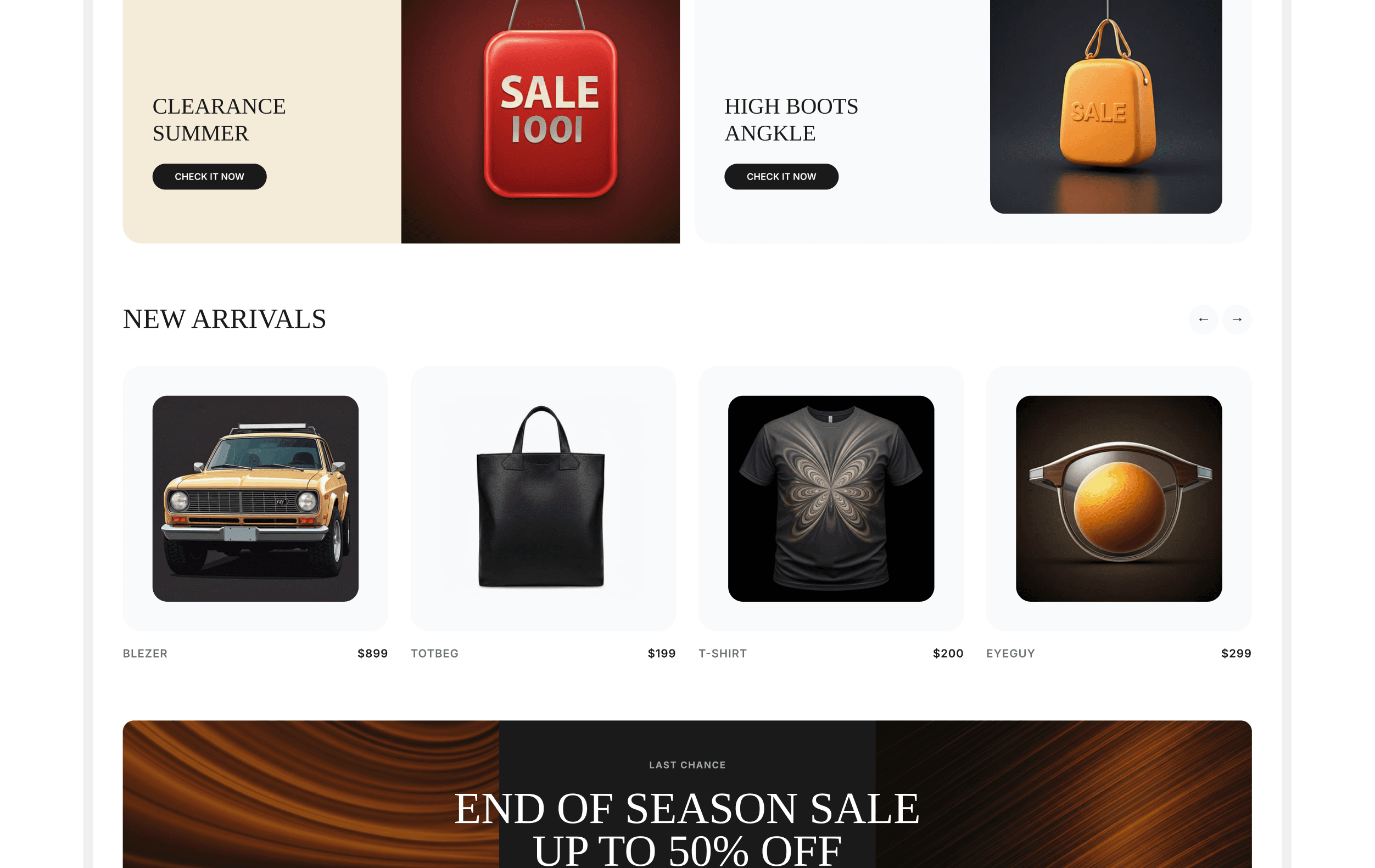
custom e-commerce product page design showing mobile-first layout with reviews and add-to-cart optimisation
The Real Impact

Why It Matters

If your online store loads slowly, looks outdated, or makes buying difficult, customers will leave. They will not email you to complain. They will just buy from someone else. E-commerce is not forgiving. Users form an opinion about your store in seconds. If the first impression is poor, they bounce. If the checkout is confusing, they abandon their cart. If the mobile experience is bad, they leave and probably never come back. The global e-commerce market is projected to reach $6.88 trillion in 2026. That is an enormous opportunity, but it is also an enormous amount of competition. The stores that win are not necessarily the ones with the best products. They are the ones with the best buying experience. Clean design. Fast pages. Easy checkout. Clear returns policy. Mobile that works. The teams that get the most from e-commerce development are the ones who treat their store as a product, not a project. They iterate based on data. They test their checkout. They watch session recordings. They invest in ongoing optimisation. If you are serious about selling online, your store deserves that level of attention.

Industry Data

By the Numbers

$6.88T

The market is still growing rapidly. Online retail will account for 21.1% of all retail sales globally.

Source: Shopify Global Ecommerce Sales Report, 2026

78%

Three out of four shoppers add items to their cart and leave without buying. Checkout optimisation is the highest-leverage improvement most stores can make.

Source: ConvertCart / Speed Commerce, 2025

7%

Page speed is directly tied to revenue. A one-second delay costs you measurably. Fast stores sell more.

Source: Multiple Sources / Industry Benchmark

2.5% to 3%

Most online stores convert 2 to 3 out of every 100 visitors. Even a 1% improvement at scale translates to significant revenue.

Source: Shopify, Adobe, Multiple Industry Studies, 2025

77%

More than three-quarters of your visitors are on phones. If your store is not mobile-first, you are serving the minority well and the majority badly.

Source: Shopify, 2025

"An online store is not a website with a buy button. It is a sales machine. Every element, from the product image to the shipping estimate to the confirmation email, either builds confidence or creates doubt. Build it like a salesperson, not like a brochure."
Technth Development Team

Technologies

Our Tech Stack

Python
Python
TypeScript
TypeScript
Node.js
Node.js
Laravel
Laravel

Django
Django

Next.js
Next.js
React
React
Tailwind
Tailwind
Docker
Docker
MySQL
MySQL
PostgreSQL
PostgreSQL
MongoDB
MongoDB
Supabase
Supabase
Redis
Redis
AWS
AWS

Our Process

How we turn ideas into reality.

01

Discovery and Planning

Your product catalogue, customer journey, revenue model, and operational requirements are mapped. Payment methods, shipping rules, multi-currency, and multi-language needs shape every technical choice that follows.

02

Platform Selection and Design

The right platform is recommended based on your business, not on preference. Your storefront is designed around conversion: clear product pages, intuitive navigation, fast-loading images, trust signals, and a checkout flow that removes every unnecessary step.

03

Development and Integration

Your store is built and connected to your payment gateway, shipping rules, inventory management, CRM, ERP, email marketing, and analytics. Every integration is tested end-to-end before launch.

04

Testing, Launch, and Support

Testing happens on real devices, real browsers, and real network conditions. Page speed, mobile responsiveness, checkout flow, payment processing, and edge cases are all validated. Post-launch support covers bug fixes, performance monitoring, feature additions, and seasonal updates.

Pricing

Investment Overview

Platform Choice

A Shopify theme customisation costs far less than a custom headless build. Match the platform to your actual requirements, not to what sounds most impressive. A store with 50 products and 5 categories is simpler than one with 10,000 SKUs, complex filtering, and dynamic pricing.

Contact us for a detailed project estimation.

Integrations and Custom Functionality

Every third-party connection (ERP, CRM, email marketing, inventory, shipping) adds development time. Features like subscription models, product configurators, customer portals, and B2B pricing rules require custom development beyond what any platform offers out of the box.

Contact us for a detailed project estimation.

Ongoing Support

A store that launches and receives no further attention will degrade. Budget for ongoing maintenance, security updates, and iterative improvements. Start with the simplest version of your store that can actually sell. Launch, learn from real customer behaviour, and invest in the features that data tells you matter.

Contact us for a detailed project estimation.

Everything we do at Techneth is built around making data move reliably between the systems that matter. If you want to understand our approach before committing, you can read more about our team and how we work. Or explore the full range of digital product and development services we offer, like e commerce development. And if you already know what you need, get in touch directly and we will find time to talk.

Frequently Asked Questions

Everything you need to know about this service.

How long does it take to build an online store?
A Shopify store with a premium theme, customised branding, and standard integrations typically takes 4 to 8 weeks. A WooCommerce store with custom functionality takes 6 to 12 weeks. A fully custom-built e-commerce platform with complex integrations and bespoke features can take 4 to 8 months. The timeline depends on the number of products, the complexity of your checkout flow, the integrations required, and how quickly feedback and content are provided.
Which e-commerce platform should I choose?
That depends on your business model, your budget, and your technical team. Shopify is best for most DTC brands that want speed, reliability, and minimal technical overhead. WooCommerce is ideal if you are already on WordPress and need deep content integration. Custom builds suit complex B2B requirements or unique business logic that no platform handles natively. This decision is made during the discovery phase based on your actual requirements, not assumptions.
How do you handle payment processing?
Integration is handled with Stripe, PayPal, Apple Pay, Google Pay, and platform-native payment processors. For international stores, multi-currency checkout and local payment methods relevant to your target markets are set up. Every payment flow is tested end-to-end, including refunds and failed transactions, before launch. Payment card data is not built or stored directly. That is handled by PCI-compliant payment providers.
Can you build a B2B e-commerce store?
Yes. B2B e-commerce has different requirements than DTC: customer-specific pricing, bulk ordering, approval workflows, purchase orders, net payment terms, and account management portals. B2B stores are built on Shopify Plus, WooCommerce with B2B plugins, or fully custom platforms depending on the complexity. The B2B e-commerce market is valued at over $32 trillion globally.
What about SEO for my e-commerce store?
SEO is built into the development process from the start, not added as an afterthought. That means clean URL structures, proper heading hierarchy, structured data for products, optimised image alt text, fast page load times, and canonical tags to prevent duplicate content. Analytics and search console integration are set up so you can track performance from day one.
What is headless commerce and do I need it?
Headless commerce separates the frontend from the backend. This allows a completely custom frontend experience while using a commerce engine like Shopify or commercetools for the transactional logic. You probably need it if your brand demands a highly differentiated, fast, and flexible frontend experience across multiple channels. Most small to mid-size stores do not need headless, and the added complexity is not justified.

Ready to get a quote on your e commerce development?

Tell us what you are building and we will put together a scoped proposal within 3 business days. Here is what happens when you reach out:

  • 1
    You fill in the short project brief form (takes 5 minutes).
  • 2
    We review it and come back with initial thoughts within 24 hours.
  • 3
    We schedule a 30 minute call to align on scope, timeline, and budget.
  • 4
    You receive a written proposal with fixed price options.

No commitment required until you are ready. Request your free e commerce development quote now.

Ready to start your next project?

Join over 4,000+ startups already growing with our engineering and design expertise.

Trusted by innovative teams everywhere

Client 1
Client 2
Client 3
Client 4
Client 5
Client 6
Client 7
Client 8
Client 9
Client 10
Client 11
Client 12
Client 1
Client 2
Client 3
Client 4
Client 5
Client 6
Client 7
Client 8
Client 9
Client 10
Client 11
Client 12