One Codebase, Every Device
One codebase in Flutter or React Native that ships to iOS and Android, with the conventions of each platform respected so it does not feel like a website in an app.
Overview
What is Cross Platform App Development?
Cross platform app development is the process of building one codebase that runs on both iOS and Android, usually with Flutter or React Native. It removes duplicated work and keeps both apps in step, while still allowing native code where a feature needs direct access to the platform.
Cross platform pays off when both platforms need the same features and the interface is mostly content, forms, and lists. Framework choice comes first: Flutter when you want consistent rendering and control over animation, React Native when your team already lives in TypeScript and React. Either way, navigation, gestures, and typography follow each platform rather than picking one and forcing it on the other. Native modules are written where no plugin exists, and both store submissions come out of one build pipeline.
Capabilities and features
Flutter or React Native, Chosen for Your Case
The two are not interchangeable. Flutter gives consistent rendering and strong control over animation. React Native reuses React and TypeScript skills and shares code with a web app more easily. The trade offs are laid out against your team and your roadmap before anything is committed.
- Flutter with Dart, or React Native with TypeScript
- Recommendation based on your team, roadmap, and interface needs
- Shared logic with your web app where that genuinely helps
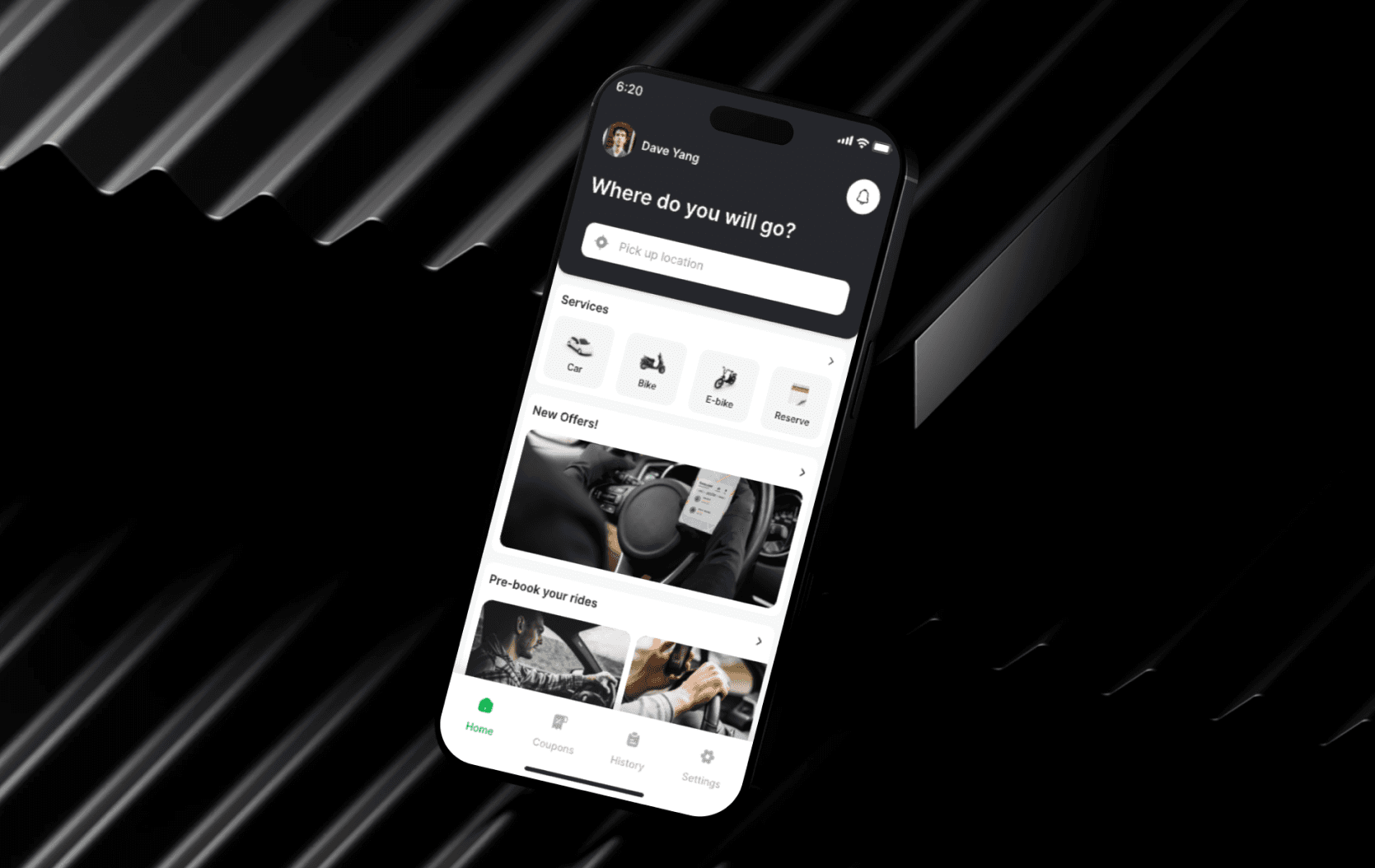
Feels Like iOS on iOS, Android on Android
Navigation patterns, back behaviour, date pickers, share sheets, and typography differ between platforms, and users notice when they are wrong. The interface adapts on both, from one design system, rather than shipping a single look everywhere.
- Platform correct navigation, gestures, and system dialogs
- One design system with per platform behaviour where it matters
- Accessibility and larger text sizes handled on both platforms

Two Stores, One Pipeline
Both submissions come from one automated pipeline, so builds, versioning, signing, and release notes stay in step. Store requirements differ, and each set is prepared before upload rather than discovered halfway through review.
- Automated builds and signing for App Store and Google Play
- Privacy disclosures prepared for both stores
- Crash reporting and staged rollouts on both platforms

The real impact
Why it matters
Two native teams means two backlogs, two release cycles, and features that drift apart. One codebase keeps both platforms level and cuts the cost of every change after launch, which is where most of an app budget is actually spent.
Of all mobile app projects predicted to use cross-platform frameworks by 2026. This is no longer niche. It is becoming the default.
Source: Persistence Market Research, 2025
Of cross-platform developers use Flutter, making it the most popular framework. React Native follows at 35%. Both are production-ready.
Source: Statista Developer Survey, 2023
Cost savings compared to building two native apps. One team, one codebase, two platforms. This is the core financial case.
Source: Industry average, multiple sources
Technologies we build with
 Flutter
 React Native
 Swift
Swift Kotlin
 Firebase
 SupabaseFlutterReact NativeSwiftKotlinFirebaseSupabase
 GraphQL
 Node.js
 Figma
Figma AWS Amplify
 Python
 PostgreSQLGraphQLNode.jsFigmaAWS AmplifyPythonPostgreSQL
Explore more
Related services
More ways we help teams with mobile development.
FAQ
Frequently asked questions
Everything you need to know about this service.
For most apps, not in any way users notice. Flutter and React Native handle lists, forms, media, and animation well. Native still wins for heavy graphics, sustained camera or sensor processing, and brand new platform features, and we will say so if your app is in that category.
Ready to start your next project?
Let us turn your idea into software that scales. Book a free consultation and we will map out the build with you.
Trusted by the teams we build with