Why software is getting narrower, not broader
What does this guide cover?
- Why software is getting narrower, not broader
- What is vertical SaaS?
- Vertical SaaS vs horizontal SaaS
- The benefits of the vertical SaaS model
- Vertical SaaS examples across industries
- What it takes to build a vertical SaaS
- Why vertical SaaS is winning
- Common questions before you build or buy
- Why the vertical shift matters for your business
- Vertical SaaS by the numbers
- What clients ask us about building vertical SaaS
- Frequently asked questions about vertical SaaS
- Building your vertical SaaS
For two decades the winning move in software was to go wide, build one tool that any business could use and sell it to everyone. That era is fading. The fastest-growing software companies today do the opposite, they go deep into a single industry and refuse to serve anyone else. This guide explains what vertical SaaS is, how it differs from the horizontal software most people grew up on, why it commands higher prices and holds onto customers so tightly, and what it takes to build one. We build these platforms at Techneth, so alongside the definitions you will get the practical view of what actually makes a vertical SaaS work.
What is vertical SaaS?
Vertical SaaS is software-as-a-service built for one specific industry rather than for businesses in general. Instead of serving every company, a vertical platform solves the exact daily workflows, compliance rules, and terminology of a single sector, such as healthcare, construction, restaurants, or logistics. Every table, screen, and automation is designed to speak that industry's language.
The contrast is with horizontal SaaS, the broad tools like general CRMs, spreadsheets, or chat apps that work for almost any business precisely because they are not tailored to any one of them. A vertical SaaS trades that wide reach for depth, and as it turns out, depth is where the money and the loyalty are.
Vertical SaaS vs horizontal SaaS
The highway and the railway
Think of horizontal SaaS as a massive multi-lane highway, used by every kind of vehicle to get from point A to point B. Vertical SaaS is a purpose-built high-speed rail line, engineered to carry one kind of cargo through one territory. One trades specialization for reach, the other trades reach for a grip on its market that is very hard to break.
Core differences at a glance
Read the retention and pricing rows together and the whole vertical SaaS thesis appears, when software becomes the backbone of how an industry works, customers stay and they pay more.
The benefits of the vertical SaaS model
Instant value and lower churn
A vertical platform delivers value the moment a user logs in, because it already understands their trade. There are no weeks spent writing custom scripts or bolting on fragile plugins to make a generic tool fit. It knows the compliance rules, the reporting standards, and the workflows out of the box. And once a system runs the core of a business, tracking perishable shipments, managing patient charts, scheduling field crews, it becomes very hard to remove. That stickiness is why churn on good vertical products runs so low.
Stronger margins and retention
Businesses resist paying premium prices for general software, but they will pay well for a tool that solves their exact, high-stakes problems. That shifts the software from an administrative cost into something closer to essential equipment. The numbers back it up, top vertical SaaS companies report net revenue retention of 120 to 140 percent, meaning existing customers spend more each year, not less. Many deepen that further by embedding payments and other financial services, which can lift revenue per customer several times over while making the platform even harder to leave.
Vertical SaaS examples across industries
The pattern is easiest to see through the companies living it. Toast built the operating system for restaurants and reached around 2 billion dollars in annual recurring revenue across roughly 156,000 locations. ServiceTitan did the same for plumbers and HVAC contractors, growing revenue 26 percent in a recent year while holding gross retention above 95 percent. Veeva dominates life sciences, Procore runs construction projects, and Shopify anchors independent e-commerce. Different industries, identical playbook, they went deep into one sector's reality instead of spreading thin across all of them. Each of these could fill a guide on its own, which is why we cover them separately in our roundup of vertical SaaS examples.
What it takes to build a vertical SaaS
The architecture that makes it work
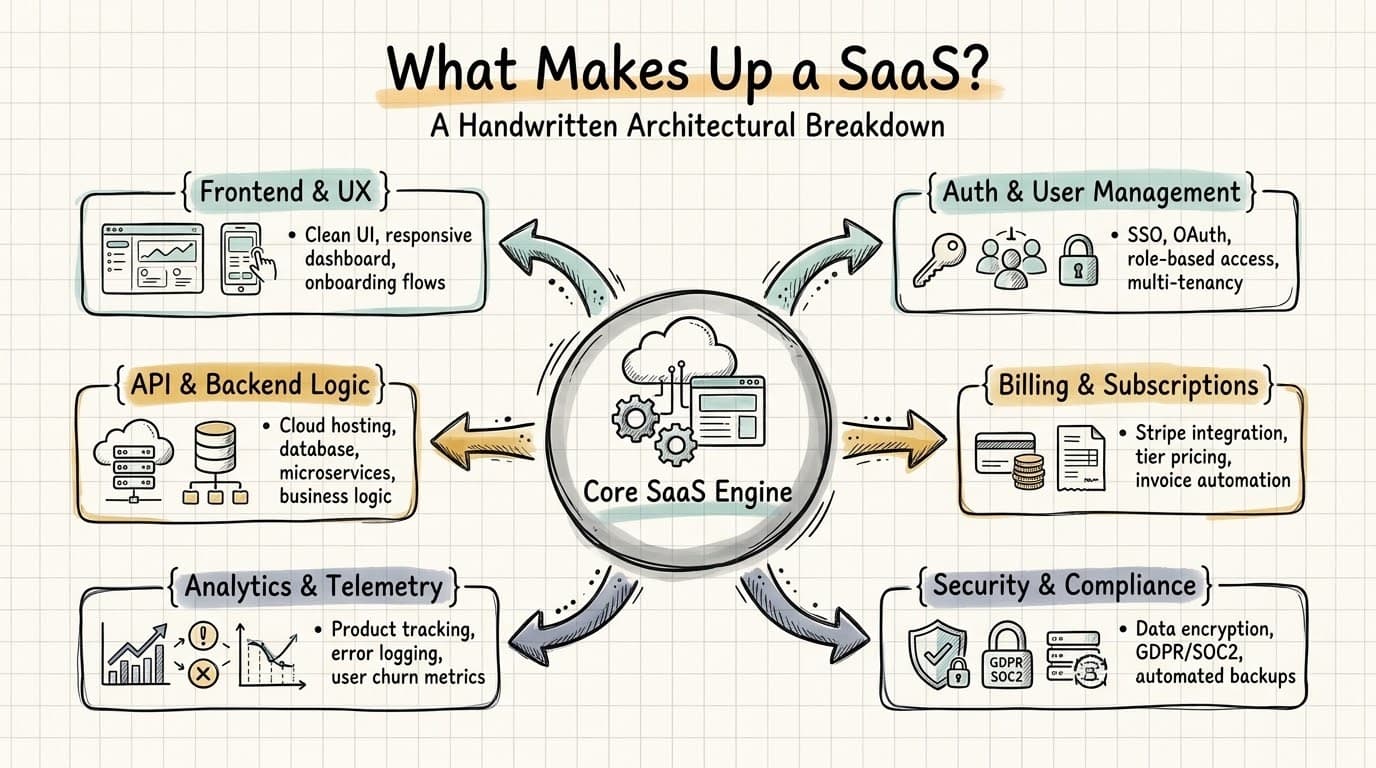
Dominating an industry needs a real engineering foundation, not a low-code template stretched past its limits. Three things matter most. The data model has to mirror the physical reality of the industry, not just the screens, which calls for careful database design and optimization from day one. Compliance has to be built into the code, with encrypted storage and audit trails native to the platform, the sort of thing a serious SaaS platform development process bakes in early. And because industry professionals live in the software for hours a day, the interface has to be fast and genuinely usable, which is where strong UI/UX design earns its keep. Get those three right and you have a platform that can carry an entire sector.
Why vertical SaaS is winning
The market has noticed. Vertical SaaS is growing at roughly 16 percent a year, close to double the pace of the broader SaaS market, and investors now pay about a 41 percent premium for vertical companies over horizontal ones, the widest gap on record. The reasons are structural, not fashion, deeper workflow integration, proprietary industry data, and switching costs so high that leaving means relearning how you operate. The same forces that favor specialized AI over generic models favor specialized software over generic tools. For founders, a vertical focus is also simply more defensible, it is easier to become the obvious choice in one industry than to fight for attention across all of them.
Common questions before you build or buy
A few questions come up constantly. Is vertical always better than horizontal? No, horizontal still wins for genuinely universal needs like email or general accounting, vertical wins wherever an industry's workflow is specific enough that a generic tool creaks under it. What industries suit vertical SaaS best? Any sector with distinct rules and processes, healthcare, construction, legal, logistics, hospitality, and finance lead the way. Can you turn a horizontal product into a vertical one? Sometimes, by going deep on one segment's needs, but it usually means rebuilding workflows rather than adding a feature, and it is often cleaner to design vertical from the start.
Why the vertical shift matters for your business
If you run software for an industry, this shift changes the competitive math. A generalist competitor can be out-built by someone who understands the trade more deeply, and the tools everyone wants next, industry-specific AI, embedded payments, real-time analytics, all reward the platform that owns the sector's data and workflow. Whether you are a founder eyeing a niche or an established business whose generic tools are starting to creak, the direction is the same, depth beats breadth. If you want to see the kind of specialized platforms this thinking produces, our portfolio of custom products is a good place to look.
Vertical SaaS by the numbers
The scale is striking. The vertical SaaS market is worth roughly 143 billion dollars in 2026 and is forecast to reach about 499 billion by 2035, a pace near 16 percent a year that outruns the broader SaaS market. Vertical platforms sell at around a 41 percent valuation premium over horizontal ones, the widest gap recorded. North America holds close to 45 percent of the market, and healthcare and life sciences is the single largest vertical at about 21 percent of revenue. Retention is the engine underneath it all, leaders such as ServiceTitan keep gross retention above 95 percent.
© techneth.com
The vertical products that win are not the ones with the longest feature list. They are the ones that understand a customer's work better than anyone else, then refuse to dilute that focus. That principle guides how we scope every platform, which you can read about on our about Techneth page.
What clients ask us about building vertical SaaS
How long does it take to build a vertical SaaS MVP?
We typically deliver a first working MVP in one to two months, then iterate. We work in two-week sprints with a demo at the end of each, so you see real software every week and can refine the industry workflows as we learn, rather than waiting months for a single reveal.
Do we own the code and IP?
Yes, you own the code and the intellectual property outright, with no lock-in to us. For a vertical platform that may become the backbone of your business, that ownership matters. We build it so your own team can run and extend it if you choose, and we stay on for post-launch support.
How do you learn our industry well enough to build for it?
Discovery first. Before proposing anything we study how your business actually works, the real workflows, the compliance rules, the edge cases. That upfront understanding is what separates a true vertical platform from a generic tool with your logo on it, and it is where we spend real time early.
Can you handle compliance for regulated industries?
Yes. We build to enterprise-grade standards including SOC2, GDPR, and HIPAA where relevant, with encrypted storage and audit trails native to the platform. For regulated verticals like healthcare or finance, compliance is designed into the architecture from the start rather than added on later.
Do you work with startups as well as established companies?
Both. We have delivered 50 plus projects across startups and established businesses, backed by a team of 20 plus engineers. Whether you are a founder validating a niche or a company turning a proven workflow into a product, the discovery-first approach is the same.
Frequently asked questions about vertical SaaS
What is vertical SaaS in simple terms?
Vertical SaaS is cloud software built for one specific industry rather than for businesses in general. It handles the exact workflows, terminology, and compliance rules of that sector out of the box, so users in that industry get value immediately without heavy customization.
What is the difference between vertical and horizontal SaaS?
Horizontal SaaS serves many industries with broad, general features, like a CRM or chat tool. Vertical SaaS serves one industry deeply, tailoring everything to that sector's needs. Horizontal trades depth for reach, vertical trades reach for depth and much stronger customer retention.
What are examples of vertical SaaS?
Toast for restaurants, ServiceTitan for plumbing and HVAC, Veeva for life sciences, Procore for construction, and Shopify for e-commerce are well-known examples. Each dominates a single industry by building around that sector's real workflows rather than serving businesses in general.
Why is vertical SaaS growing so fast?
Generic tools eventually hit a wall in any specialized industry. Vertical SaaS grows because it integrates deeply into daily work, accumulates industry-specific data, and creates high switching costs. It is expanding at roughly double the pace of horizontal SaaS and commands higher valuations.
What are the benefits of vertical SaaS?
Immediate out-of-the-box value, very low churn because the software becomes essential to operations, stronger pricing power, lower customer acquisition costs through targeted channels, and the ability to add industry-specific features and embedded finance that generic platforms cannot match.
Is vertical SaaS better than horizontal SaaS?
Neither is universally better. Vertical SaaS wins wherever an industry's workflow is specific enough that generic tools struggle. Horizontal SaaS remains the right choice for genuinely universal needs. The best choice depends on how specialized the problem you are solving actually is.
What industries use vertical SaaS?
Healthcare, construction, restaurants and hospitality, logistics, legal, real estate, and financial services are among the strongest. Any sector with distinct regulations, terminology, and workflows is a good fit, which is why healthcare and life sciences is currently the largest vertical.
How do you build a vertical SaaS product?
Start with deep discovery of the industry's workflows, then build on a solid architecture, a data model that mirrors the industry, compliance embedded in the code, and a fast, usable interface. Designing vertical from the start is usually cleaner than adapting a general product later.
Is vertical SaaS a good business model?
It can be very strong. High retention, premium pricing, and expansion revenue through embedded services give vertical SaaS attractive economics, which is why it earns a valuation premium. The main challenge is the smaller total market, so dominating the niche matters more than broad reach.
Building your vertical SaaS
If you are weighing a vertical platform, whether you are a founder targeting a niche or a business ready to turn a proven workflow into a product, the best first step is a conversation about your industry and where generic tools are failing it. You can book a free consultation and we will map out a realistic path from idea to working software.
You can also learn more about Techneth and how we work, explore our full range of services including SaaS platform development and UI/UX design, or see real products in our portfolio.
If you are moving from idea toward a build, a useful next step is our practical guide to custom SaaS platform development, where the how takes over from the what.