Where most vertical SaaS products win or lose
How do you actually build a vertical SaaS?
- Where most vertical SaaS products win or lose
- The seven steps to build a vertical SaaS
- Start with the industry, not the idea
- Build the wedge, then the platform
- The architecture that carries an industry
- Price to the industry's sense of value
- Launch an MVP, then expand
- Where vertical SaaS is working, by industry
- Questions founders ask before building
- Why the build order matters
- Vertical SaaS economics by the numbers
- What clients ask us about building vertical SaaS
- Frequently asked questions about building a vertical SaaS
- Building your vertical SaaS
Building a vertical SaaS is less about writing clever code and more about choosing the right industry and understanding it better than anyone else. The products that win are not the ones with the longest feature list, they are the ones that encode how a specific industry actually works, then refuse to be distracted. This guide walks through how to build a vertical SaaS from first decision to launch, seven practical steps covering how to pick the niche, map its workflows, design the architecture, price it, and ship an MVP that can grow into a full platform. We build these products at Techneth, so you will get the working view, not just the theory.
The seven steps to build a vertical SaaS
At a high level, building a vertical SaaS follows the same seven steps almost every successful platform took:
- Choose the industry, not the idea. Pick a large, fragmented market you can learn deeply.
- Learn the workflows inside out. Map how the industry really operates, edge cases included.
- Validate against real users and existing tools. Confirm the pain is worth paying to remove.
- Build a wedge product. Solve one painful workflow exceptionally well before expanding.
- Get the architecture right. Domain-driven data, built-in compliance, and a fast interface.
- Price to the industry's sense of value. Charge for outcomes, not just per seat.
- Launch an MVP, then expand into a platform. Ship, learn, and add adjacent workflows.
Start with the industry, not the idea
How to pick a vertical worth owning
The most common mistake is falling in love with a feature before choosing a market. Flip that order. Start by picking an industry with three traits, a large total market, lots of fragmented small and mid-size businesses rather than a few giants, and workflows painful enough that people still run them on spreadsheets. The so-called boring industries are often the best, machine shops, for instance, represent a market worth hundreds of billions across tens of thousands of companies, most of them underserved by software. A big, fragmented, overlooked market is where a vertical SaaS can become the default.
Learn the workflows inside out
Once you have the industry, learn it until you could do the job yourself. Sit with the people who will use the software, watch how they actually work, and map the ten or so workflows every business in that vertical runs daily. This is the step generic software skips, and it is exactly why generic software fails in specialized industries. It is also where we spend real time early, before proposing anything we study how your target industry operates, because a vertical product is only as good as its understanding of the work. Skip this and you build a horizontal tool with an industry logo on it.
Build the wedge, then the platform
You do not need to build the whole platform on day one, and you should not try. The proven pattern is a wedge, one workflow solved so well that customers adopt you for it alone. A roofing software company started with a simple quoting tool, earned trust, then expanded into a full CRM for roofers. Toast began with restaurant point of sale, then grew outward into payroll, payments, and more. Solve one problem exceptionally, become indispensable for it, then expand into the adjacent workflows your customers already trust you to handle. That sequence lowers your risk and funds the rest of the build.
The architecture that carries an industry
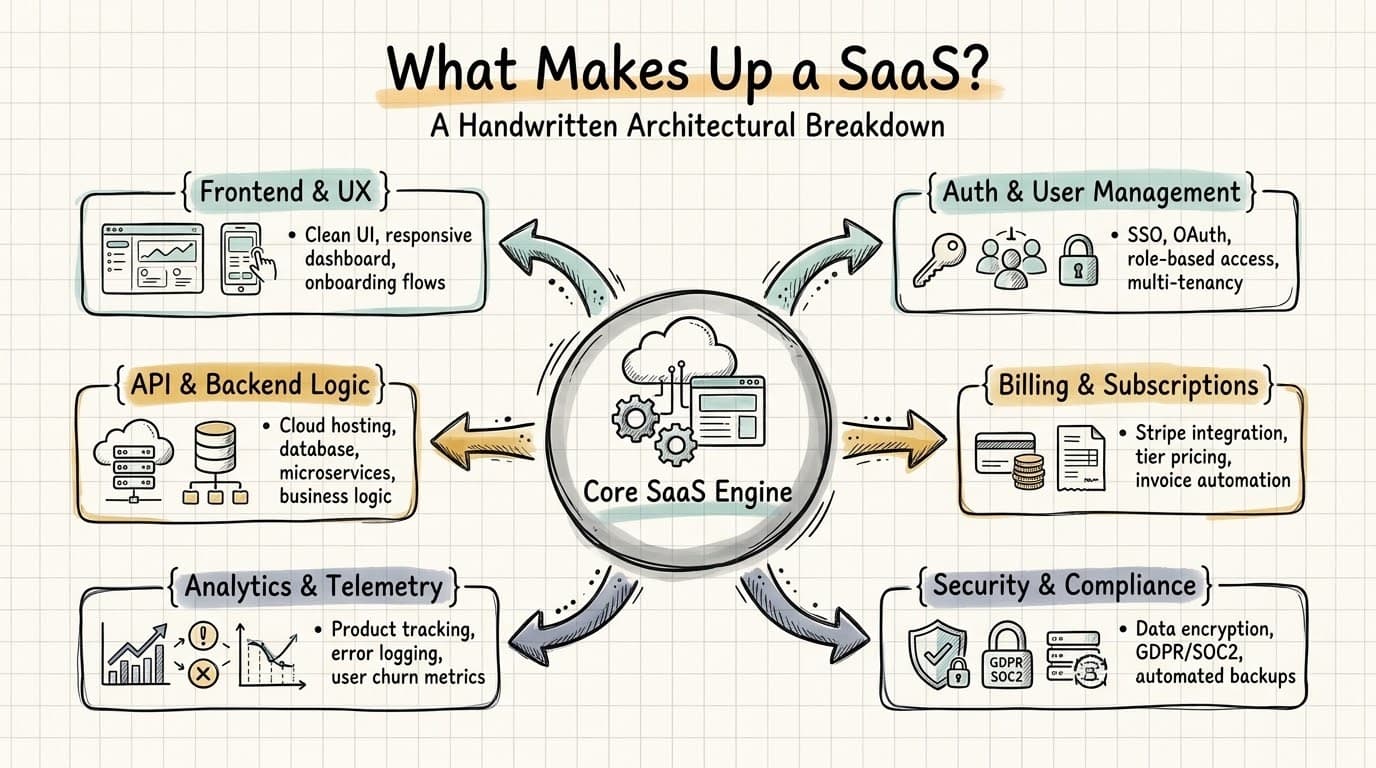
A platform meant to run an entire industry needs a real engineering foundation, not a low-code template stretched past its limits. Three things carry the most weight. The data model has to mirror the physical reality of the industry rather than just the screens, which is why careful database design and optimization matters from the first sprint. Compliance has to live in the code, with encrypted storage and audit trails native to the platform, the kind of thing a disciplined SaaS platform development process builds in early rather than bolting on later. And because industry professionals live in the software all day, the interface has to be fast and genuinely usable, which is where strong UI/UX design pays for itself. Get those three right and the platform can scale with the industry instead of buckling under it. Reliable backend and API development ties them together, since a vertical platform lives or dies by its integrations.
Price to the industry's sense of value
Horizontal software prices simply, per user per month. Vertical SaaS should not. Because your product solves a specific, high-stakes problem, you can price to the value you create rather than the seats you fill. A useful starting point is to estimate the money you save or make a customer, then price at a fraction of that and adjust with feedback. Many of the strongest vertical platforms go further and embed payments or other financial services, which can multiply revenue per customer while making the software even harder to leave. Toast expanded its market dramatically by adding payment processing on top of its core product. Pricing is a product decision, not an afterthought.
Launch an MVP, then expand
Ship a focused MVP that nails the wedge workflow, put it in front of real users, and let their feedback set the roadmap. Speed matters here, we typically deliver a first working MVP in one to two months, then iterate in two-week sprints with a demo at the end of each, so the product is shaped by real use rather than guesswork. From there you expand deliberately, adding the adjacent workflows that turn a single useful tool into the operating system for the industry. The goal is not to launch everything, it is to launch the right thing, then earn the rest.
Where vertical SaaS is working, by industry
The pattern repeats across sectors. These platforms each went deep into one industry's workflows, and each became the default there.
Different industries, one playbook, own the workflow and you own the customer.
Questions founders ask before building
A few come up in nearly every first conversation. What is the first step? Choosing the industry, deliberately, before any product design. What tech stack should I use? Whatever fits the workflows and scales cleanly, robust databases like PostgreSQL, a modern application framework, and cloud infrastructure, chosen for the job rather than for fashion. How much does it cost? It depends on the scope of the wedge and the compliance burden of the vertical, which is why we scope after discovery rather than quoting blind. Do I need embedded payments? Not at launch, but it is often the single biggest lever for revenue and retention once the core product works.
Why the build order matters
The sequence in this guide is not arbitrary. Teams that start with the industry and the wedge tend to reach product-market fit and stay there, because everything they build sits on real understanding. Teams that start with a broad feature set usually burn their runway building things no one in the industry actually needed. Vertical SaaS rewards discipline, one industry, one wedge, then deliberate expansion, and it punishes the urge to serve everyone at once. If you want the strategic backdrop for all of this, our complete guide to vertical SaaS explains why the model wins in the first place.
Vertical SaaS economics by the numbers
The economics are what make the effort worth it. The vertical SaaS market is worth roughly 143 billion dollars in 2026 and is forecast to reach about 499 billion by 2035, a pace near 16 percent a year that outruns the broader SaaS market. The reason investors pay a premium is retention, top vertical platforms report net revenue retention of 120 to 140 percent, meaning customers spend more each year, and vertical companies now command around a 41 percent valuation premium over horizontal ones. A focused MVP, which we typically deliver in one to two months, is how you start capturing that.
© techneth.com
The hardest part of building a vertical SaaS is not the engineering. It is the discipline to learn one industry deeply and solve one workflow completely before reaching for the next. That focus shapes how we scope every product, which you can read about on our about Techneth page.
What clients ask us about building vertical SaaS
How long does it take to build a vertical SaaS MVP?
We typically deliver a first working MVP in one to two months, then iterate. We work in two-week sprints with a demo at the end of each, so you see real software every week and can refine the industry workflows as we learn, rather than waiting months for a single reveal.
How do you learn our industry well enough to build for it?
Discovery first. Before proposing anything we study how the target industry actually works, the real workflows, the compliance rules, the edge cases. That understanding is what separates a genuine vertical platform from a generic tool with your logo on it, and it is where we invest time early.
Do we own the code and IP?
Yes, you own the code and the intellectual property outright, with no lock-in to us. For a platform that may become the backbone of a business, that ownership matters. We build it so your own team can run and extend it if you choose, and we stay on for post-launch support.
Can you handle compliance for regulated verticals?
Yes. We build to enterprise-grade standards including SOC2, GDPR, and HIPAA where relevant, with encrypted storage and audit trails native to the platform. For regulated industries like healthcare or finance, compliance is designed into the architecture from the start rather than added later.
Do you help after launch?
Yes. We stay through launch and beyond, including App Store submission where relevant and ongoing post-launch support. A vertical platform grows by adding workflows over time, so we work as part of your team rather than handing off and disappearing at go-live.
Frequently asked questions about building a vertical SaaS
How do you build a vertical SaaS?
Choose a large, fragmented industry, learn its workflows deeply, validate the pain with real users, then build a wedge product that solves one workflow exceptionally well. Add the right architecture, price to value, launch an MVP, and expand into adjacent workflows over time.
What is the first step in building a vertical SaaS?
Choosing the industry, not the product idea. Look for a market that is large, fragmented across many small and mid-size businesses, and still running on spreadsheets or outdated tools. The right industry choice shapes every decision that follows, so it comes before any design work.
How do you choose a niche for a vertical SaaS?
Look for three traits, a large total market, many fragmented small and mid-size businesses rather than a few giants, and painful workflows that current software serves badly. Overlooked, unglamorous industries are often the strongest, because they have real budgets and little good software.
How much does it cost to build a vertical SaaS?
Cost depends on the scope of the initial wedge product and the compliance burden of the industry. A focused MVP is far cheaper than a full platform, which is why starting narrow is smart. The reliable way to get a figure is a discovery phase that scopes the actual first build.
How long does it take to build a vertical SaaS?
A focused MVP can be built in one to two months, then refined through iteration. Expanding into a full platform takes longer and happens in stages. Building incrementally, one workflow at a time, lets you launch and learn quickly rather than waiting on a large all-at-once release.
What tech stack is used for vertical SaaS?
There is no single stack. Most vertical platforms use a robust relational database such as PostgreSQL, a modern application framework, and cloud infrastructure that scales. The right choice follows the industry's workflows and data needs rather than trends, with security and compliance built in.
What is a wedge product in vertical SaaS?
A wedge is a narrow first product that solves one painful workflow so well that customers adopt it on its own. It earns trust and revenue, then becomes the entry point for expanding into adjacent workflows. Many major vertical platforms began as a single-purpose wedge.
How do you price a vertical SaaS?
Price to the value you create, not just per seat. Estimate the money you save or make a customer, then charge a fraction of that. Many vertical platforms add embedded payments or financial services, which can lift revenue per customer significantly and deepen retention.
Building your vertical SaaS
If you have an industry in mind and want to turn it into a platform, the best first step is a conversation about the workflows and where current tools are failing them. You can book a free consultation and we will map a realistic path from wedge to platform.
You can also learn more about Techneth and how we work, explore our SaaS platform development service, see a real SaaS product we built in the Tryneth case study, or browse our full range of services.
If you are still deciding whether a vertical approach is right for your idea, start with our guide to what vertical SaaS is and why it wins.