How to automate your business?
Running a successful business often feels like a constant battle against the clock. Many ambitious founders and managers start their days with grand strategic plans, only to spend their most valuable hours trapped inside an avalanche of minor administrative chores. Manually moving data between separate spreadsheets, responding to identical customer questions, sorting through emails, and tracking down invoices creates an exhausting bottleneck that drains your team's creative energy. When your personnel are buried under repetitive daily tasks, they have no time left to focus on what actually drives your enterprise forward: closing deals and building meaningful relationships.
Artificial intelligence has officially shifted from an elite, futuristic concept into an essential tool for everyday corporate survival. Automation allows you to delegate mundane, predictable tasks to smart software agents that work twenty-four hours a day without losing accuracy or getting tired. By standardizing your internal workflows with modern data pipelines, you turn a chaotic operational environment into a highly predictable, scalable revenue machine. This guide details 10 everyday business tasks your company can immediately hand over to AI to cut overhead costs and protect your profit margins.
The 10 Everyday Business Tasks to Automate
1. Customer Support Ticket Sorting and Tagging
When customer inquiries flood your inbox, manually reading and routing them to the correct department takes precious time. AI language models can scan incoming tickets instantly, understand the sentiment, and tag them by urgency and topic. This ensures that a technical bug goes straight to your engineering squad, while a billing question hits your accounting desk immediately. To ensure your customers experience a smooth, beautiful interaction during this automated triage, deploying an accessible interface built with professional UI/UX design keeps your support portals simple and intuitive.
2. Lead Scoring and CRM Updates
Not all sales leads are created equal. Instead of forcing your sales reps to waste time guessing which prospect is ready to buy, machine learning algorithms can analyze a user’s behavior on your platform and assign a real-time interest score. The system automatically populates contact fields, tracks interaction histories, and alerts your team when a high-value account is warm. Building these custom features directly into your infrastructure through tailored custom CRM development ensures your sales team operates with a distinct competitive advantage over businesses using generic, rigid templates.
3. Invoice Processing and Billing Matches
Manual data entry inside accounting departments is notoriously prone to expensive human errors. AI-driven optical character recognition (OCR) software can read incoming paper or digital invoices, extract the essential totals, and match them automatically against your purchase orders. This streamlines your entire accounting pipeline and flags discrepancies instantly. For larger organizations trying to sync these billing workflows across supply chains and inventories, integrating these tools during comprehensive ERP development connects your front-end sales metrics directly to your back-end financial pipelines.
[Incoming Invoice PDF] -> [AI OCR Extraction] -> [Automated Matching Engine]
                                                           │
                      ┌────────────────────────────────────┴────────────────────────────────────┐
                      ▼                                                                         ▼
           [Data Matches PO: Paid]                                                   [Mismatch Flagged: Alert Team]
4. E-commerce Product Description Generation
Managing a massive online inventory with thousands of unique product variations can quickly turn into a content creation nightmare. Generative AI tools can take a basic spreadsheet containing raw technical specifications and transform those fields into engaging, persuasive product descriptions written in your exact brand voice. Implementing this style of automated content creation works best when backed by a robust E-commerce development strategy, ensuring that high-volume product catalogs load instantly and update dynamically without slowing down your site architecture.
5. Meeting Summaries and Action Item Extraction
Spending an hour in a corporate strategy meeting only to spend another thirty minutes writing summary notes is a massive drain on company time. Modern AI voice assistants can listen to your digital calls, transcribe the conversation with perfect accuracy, and summarize the key talking points into a concise, scannable email template. Crucially, the software isolates explicit action items, automatically assigning tasks and deadlines to specific team members within your project management system.
Everyday Automation Strategies
| Business Task | Manual Time Spent | AI Automated Speed | Core Enterprise Benefit |
| Support Sorting | 3–5 Minutes per ticket | Near-Instantaneous | Drastically reduces customer wait times |
| Lead Tracking | 10–15 Minutes per lead | Real-Time Sync | Puts hot prospects directly in front of sales reps |
| Invoice Matching | 15–20 Minutes per invoice | Less than 5 seconds | Eliminates data entry errors and payment delays |
| Content Updates | Hours per product batch | Minutes for thousands | Accelerates time-to-market for inventory |
6. Website Auditing and Technical Error Flagging
A broken button, a faulty contact form, or a slow-loading page can cost your business thousands of dollars in lost conversions before you even realize a problem exists. AI web crawlers can monitor your public-facing software continuously, running automated tests to ensure everything functions perfectly across all screens. These systems connect natively with performance monitoring and optimization tools to keep your core web vitals pristine, ensuring your platform ranks exceptionally well on search engine algorithms.
7. Inventory and Stock Level Forecasting
Overstocking inventory ties up your liquid capital, while running out of stock drives your loyal clients straight into the arms of your competitors. AI predictive models solve this balance by evaluating historical sales cycles, current market trends, and seasonal variables to forecast exact inventory needs weeks in advance. Managing these massive pools of data requires clean pipelines, which you can secure by optimizing your foundational layers at our database design and optimisation service workshop.
A Note on Technical Longevity:
"Automated data systems are only as reliable as the databases supporting them. Clean database indexing prevents data corruption and keeps your forecasting tools fast under heavy analytical loads."
8. Email Marketing Segmentation
Sending the exact same blanket marketing message to your entire email database leads to high unsubscribe rates and low engagement. AI algorithms can analyze customer purchase histories and browsing patterns to automatically segment your list into high-intent interest groups. The software then delivers hyper-personalized product recommendations and targeted promotions to each user, dramatically increasing your email conversion rates without requiring manual campaign adjustments.
9. Social Media Scheduling and Trend Analysis
Keeping your company’s social media channels active requires a constant stream of fresh copywriting, imagery, and trend tracking. AI listening tools can monitor global industry keywords to discover exactly what topics your target audience is discussing in real-time. The software can then draft relevant post captions, select optimal hashtags, and queue the content for distribution during peak engagement hours, ensuring your brand projects absolute authority online while your staff focuses on higher-level marketing strategies.
10. IT Infrastructure and Server Threat Detection
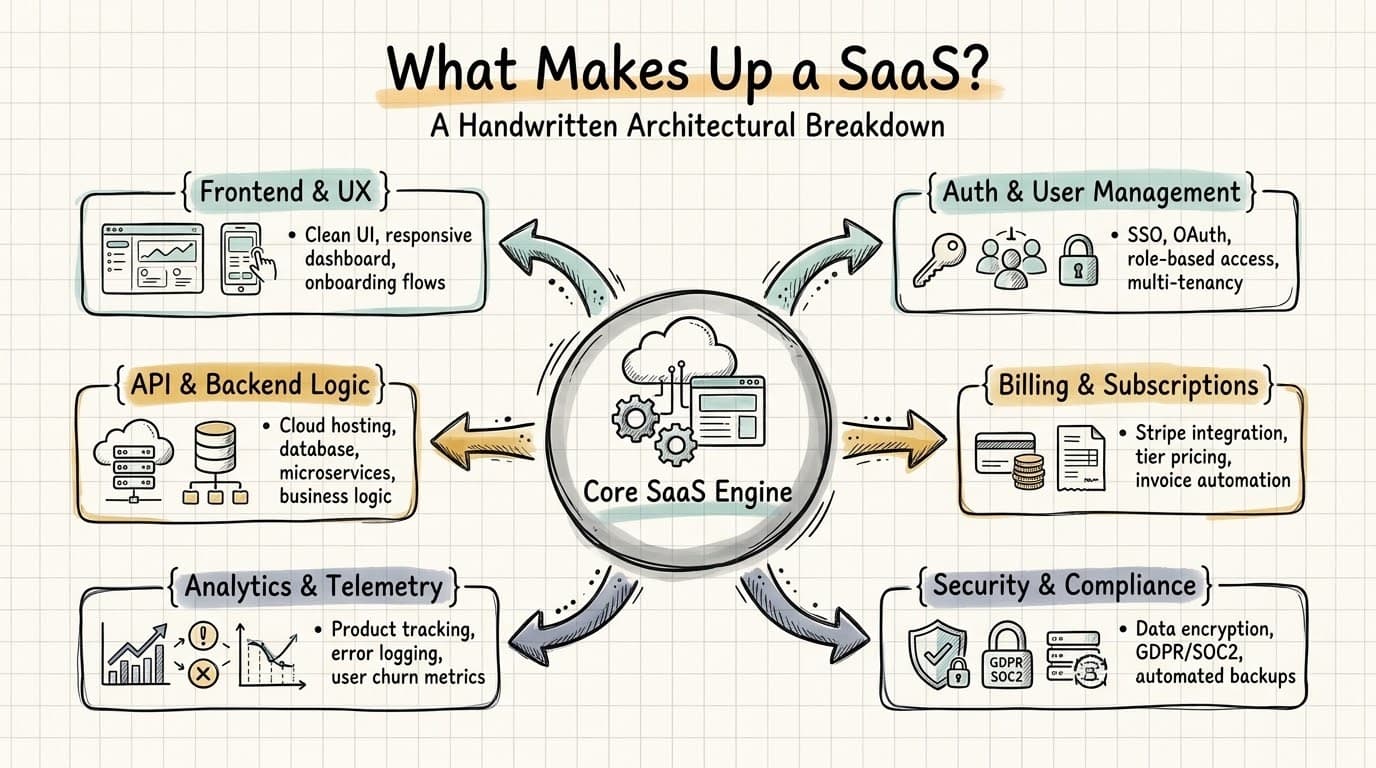
As your business expands its online footprint, protecting your digital borders against cybersecurity threats becomes a round-the-clock priority. AI security applications analyze your server logs continuously, establishing a baseline of normal user activity and flagging unusual behavior patterns instantly. This proactive defense architecture allows for immediate threat mitigation before a data breach can occur, making it a foundational requirement when engineered into a comprehensive SaaS platform development lifecycle.
Move Past Manual Bottlenecks: Secure Custom Engineering
While using general AI applications can help you automate basic, isolated tasks, true operational scale happens when automation is woven directly into the custom source code of your business software. Off-the-shelf templates and cheap software plug-ins often feature slow loading speeds, introduce severe security risks, and create fragmented data silos that hurt your internal efficiency over time. Investing in tailored software ensures that your automated tasks communicate with each other smoothly inside a fast, secure ecosystem.
If you are ready to remove administrative drag from your daily workflows and build a relentless, high-performing digital engine, our engineering team is here to design your blueprint. Explore our premium custom website development solutions to discover how clean, automated code can transform your business. Let us handle the technical architecture so your founders can focus completely on market expansion. Reach out to our engineering hub today to schedule a free technical consultation and discover what is possible for your brand.